 EN
EN

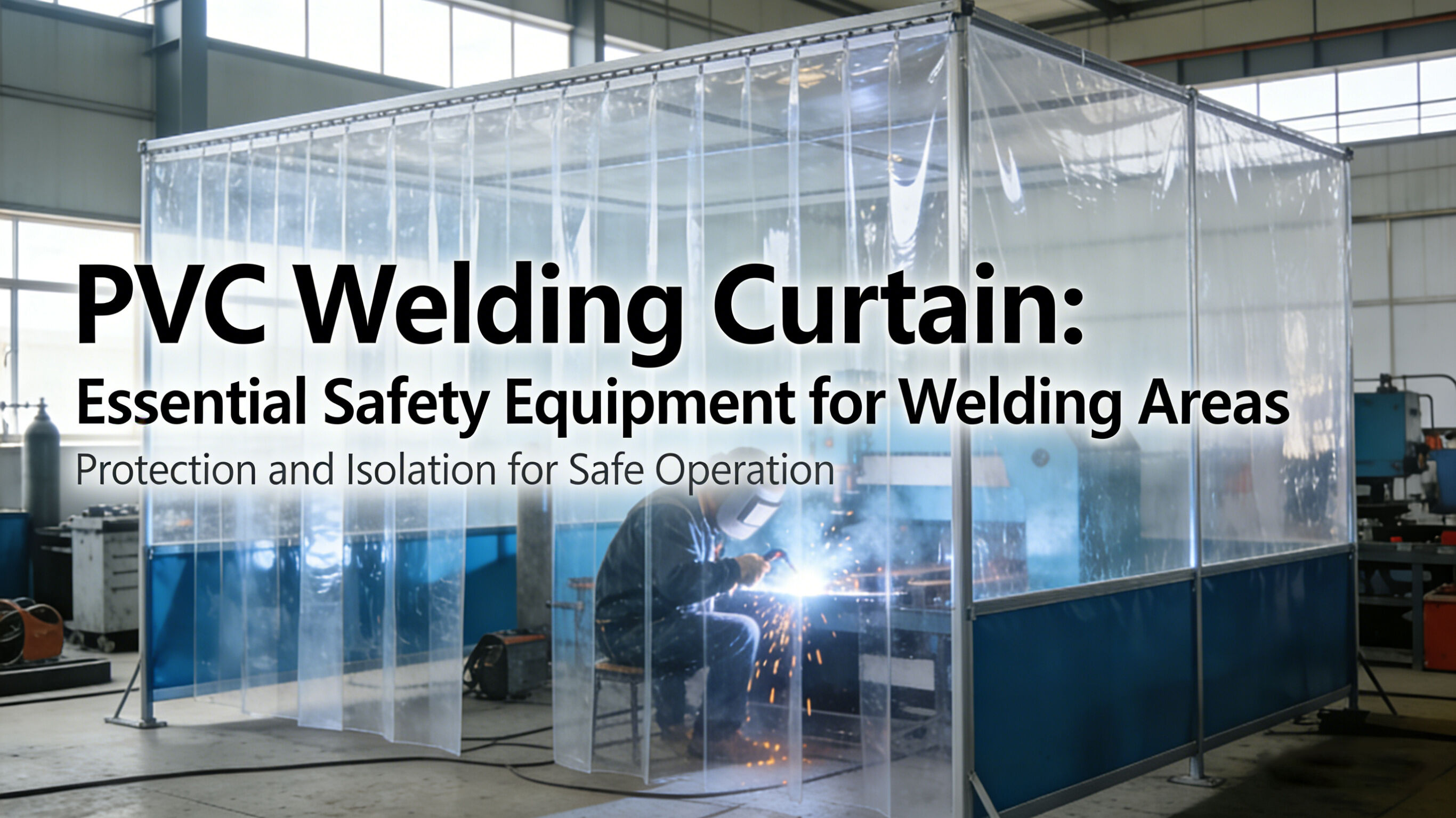
Core Safety Functions of a Welding Curtain: UV Protection, Flash Burn Prevention, and Fume Containment
How Arc Radiation Causes Flash Burn and Arc Eye
The intense ultraviolet and infrared radiation from welding arcs can cause flash burns or photokeratitis almost instantly when someone doesn't have proper protection. This type of damage affects the outer layer of the cornea and leads to what's commonly called arc eye. People who get this often experience blurry vision, find bright lights unbearable, and their eyes start watering uncontrollably. The danger isn't just from looking directly at the arc though. Ultraviolet rays bounce around quite a bit too. They reflect off various surfaces like workshop walls, metal tools, sometimes even certain types of safety eyewear. So workers might still suffer harm from these reflected rays hitting their eyes indirectly, making it just as risky as staring straight into the welding arc itself.
Optical Density and Shade Ratings (L/M/D/ED) for Effective UV and Blue Light Absorption
Optical density (OD) quantifies a welding curtain’s ability to block hazardous wavelengths. Shade ratings—Light (L), Medium (M), Dark (D), and Extra Dark (ED)—correspond to increasing OD values and are calibrated to match common welding processes:
- L (Shade 3–6): Blocks ≥99% of UV radiation; suitable for low-amperage TIG or plasma cutting.
- M/D (Shade 7–11): Attenuates ≥99.9% of UV and infrared; standard for most shielded metal arc (SMAW) and gas metal arc (GMAW) applications.
- ED (Shade 12–14): Absorbs up to 99.999% of blue light and near-UV; required for high-amperage submerged arc or carbon arc welding.
ANSI Z87.1-compliant curtains must maintain uniform optical density across all seams and panels—ensuring no weak points compromise protection.
Real-World Impact: OSHA Data Showing 72% Reduction in Eye Injuries After ANSI Z49.1-Compliant Welding Curtain Installation
Workshops and manufacturing plants that install welding curtains meeting the ANSI Z49.1 standards have seen around 72 percent fewer eye injuries related to welding work, based on reports from OSHA. These special curtains do more than just block out dangerous light rays. They actually trap flying sparks and keep welding fumes from spreading everywhere, which helps create clear danger areas where only those who need to be there are exposed. When hazards get contained right where they start, companies save money in several ways too. There are fewer worker's comp claims filed when people don't get hurt, and production doesn't slow down so much during recovery periods after accidents happen.
Fire-Resistant Material Standards for Reliable Welding Curtain Performance
Thermal Risks: Spatter, Radiant Heat, and Material Ignition Thresholds
Welding curtains face three major heat dangers. First, there's molten spatter that can reach over 1,650 degrees Celsius or around 3,000 Fahrenheit. Then comes radiant heat which has been known to set things on fire even 10 meters away from the welding area. And finally, materials have to withstand constant exposure to high temperatures that gradually weaken their structure. Anything with an auto ignition point under 500 degrees Celsius is at real risk here. Think about regular canvas, plain vinyl fabric, or standard polyester materials. These just won't cut it when exposed to welding conditions. So what makes a good welding curtain? Well, it needs to handle all these challenges while still providing proper protection...
- Spatter resistance: Withstand high-velocity droplets without burn-through or hole formation
- Radiant heat reflection: Minimize infrared energy absorption to reduce surface temperature rise
- Ignition delay: Maintain structural continuity for at least 15 minutes under sustained thermal stress
Compliance Essentials: NFPA 51B, ANSI/FM 4950, and AWS F2.3M-2019 Fire Resistance Requirements
Certified welding curtains meet stringent fire-performance benchmarks established by three authoritative standards:
- NFPA 51B (2019): Requires flame-retardant materials to self-extinguish within 2 seconds after flame removal
- ANSI/FM 4950: Classifies performance by spark exposure severity (Light/Moderate/Heavy) and mandates pass/fail results in standardized molten metal splash testing
- AWS F2.3M-2019: Specifies minimum thermal stability—no degradation or shrinkage after 5 minutes at 260°C (500°F)
Materials undergo vertical flame testing (ASTM D6413) and radiant heat transfer analysis to validate compliance. Curtains certified to all three standards demonstrate a 98% reduction in fire propagation risk, per industrial safety audit findings.
Operational Benefits of a Welding Curtain Beyond Safety Compliance
Dynamic Zone Control in Multi-Use Fabrication Facilities
Welding curtains really help create workspaces that can change quickly when needed, so fabricators don't have to wait for permits or deal with construction holdups. For shops where people do welding, grinding jobs, and put things together at the end, these flexible barriers keep dangerous stuff contained but still let the floor stay open and usable. Workers not inside the curtain area don't get stuck putting on extra safety gear all the time, which saves them time and hassle. Supervisors find they can move stations around or make them bigger/smaller depending on what's happening with production that day. Some actual shop floor research indicates that companies using these adaptable systems cut down on downtime during layout changes by about 30 percent compared to those stuck with permanent walls everywhere.
Seamless Integration with Local Exhaust Ventilation (LEV) Systems
Flame resistant welding curtains actually work better than those stiff metal boxes when it comes to boosting how well local exhaust ventilation systems perform. What makes them special is this kind of breathable design that lets air keep flowing towards the hoods but still keeps most of the smoke and dust contained right where the welding happens. The result? Better capture of contaminants right at their source, which helps meet those OSHA standards about what's allowed in the air we breathe. Shops that have started using these curtains along with their existing LEV systems see around 40% drop in problems related to breathing hazards during inspections. And bonus point nobody talks about much these days the system doesn't create weird pressure issues that mess up everything else going on in the facility.
FAQ
What is the purpose of welding curtains?
Welding curtains are designed to provide protection from ultraviolet radiation, prevent flash burns, and contain fumes and sparks during welding operations. They also contribute to workplace safety by reducing eye injuries and other hazards.
Why are different shade ratings important for welding curtains?
Different shade ratings correspond to the optical density required to protect against varying levels of UV and blue light exposure in different welding processes. This ensures that workers are adequately protected based on the specific welding application.
How do welding curtains support fire safety?
Welding curtains are made from flame-resistant materials that meet specific fire-performance standards. They provide protection against thermal risks such as molten spatter, radiant heat, and material ignition, reducing the risk of fire propagation in the workplace.
Do welding curtains integrate with existing ventilation systems?
Yes, modern flame-resistant welding curtains are designed to seamlessly integrate with local exhaust ventilation systems, enhancing the efficiency of contaminant capture without causing pressure issues in the facility.