 EN
EN

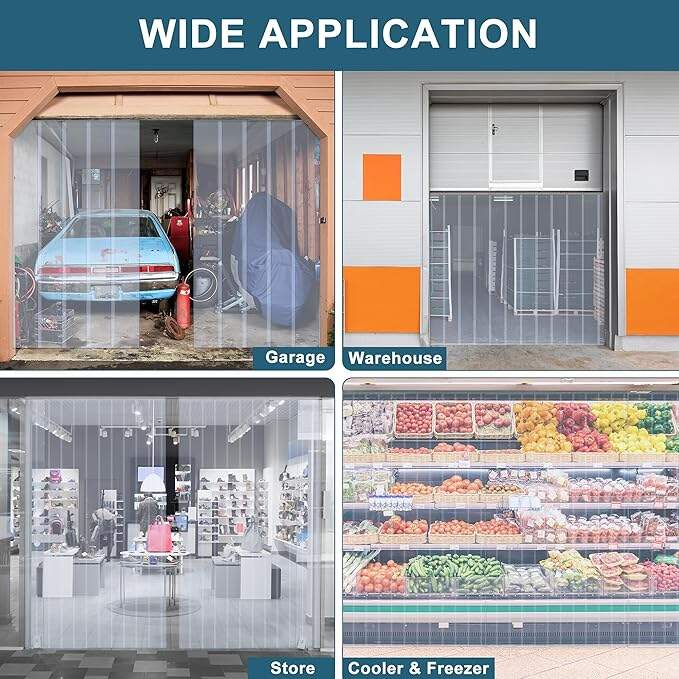
What Are PVC Curtains? Structure, Function, and Key Advantages
Definition and Core Structure of PVC Curtains
PVC curtains serve as flexible barriers constructed from polyvinyl chloride strips hanging down from overhead tracks. The material comes in either translucent or transparent options, usually measuring between about 0.8mm thick up to around 2mm thick. Most designs include weights at the bottom edges so they stay aligned properly when people pass through them. What makes these curtains really useful is their modular nature which lets businesses tailor them to fit various spaces like door openings, loading docks, or even inside factories where keeping things visible remains important but controlling drafts matters too.
How PVC Plastic Sheeting Functions as a Dynamic Barrier
PVC curtains offer something completely different compared to those stiff old barriers we used to see everywhere. They actually move with whatever goes through them people walking past or machines moving around then snap back closed pretty fast to keep air mixing down to a minimum. Cleanroom specialists have looked at this whole flow through concept and found it cuts out roughly 80 percent of floating particles in places where contamination matters most. What makes these curtains so good is their ability to bend and stretch which helps cut down factory noise levels anywhere between ten and fifteen decibels. Plus they hold up against pretty much everything thrown at them from sharp objects tearing them apart to harsh chemicals and extreme temperatures ranging all the way from minus twenty degrees Celsius right up to seventy degrees Celsius without breaking down.
Comparison with Glass and Permanent Walls
| Feature | PVC Curtains | Glass Partitions | Permanent Walls |
|---|---|---|---|
| Installation Cost | $40—$100 per linear meter | $300—$800/m² | $500—$1,200/m² |
| Visibility | 85—95% light transmission | 90—99% | 0% (unless windowed) |
| Access Flexibility | Unrestricted movement | Limited to doorways | Fixed entry points |
| Maintenance | Wipe cleaning, replace strips | Glass replacement needed | Structural repairs |
PVC curtains outperform rigid alternatives in high-traffic zones where accessibility and cost-efficiency are priorities. Industry studies confirm their 30—50% lower lifecycle costs compared to glass walls, with no structural modifications required.
Energy Efficiency and Climate Control with PVC Strip Curtains
Maintaining Indoor Climate in Commercial and Residential Spaces
PVC strip curtains act as flexible thermal barriers helping maintain different temperatures across various areas. When compared to regular solid doors, these strips don't make the heating and cooling systems struggle so much every time someone walks through. They let people move freely back and forth but still stop around 80 or 85 percent of the air from moving between spaces. For places where cold storage meets regular warehouse areas, or in those big open retail stores that need different climate control during certain seasons, these strips really come in handy. Many businesses have found they save money on energy bills while keeping their environments properly controlled throughout the year.
HVAC Cost Reduction: Data from U.S. DOE Study
A U.S. Department of Energy study found businesses using PVC curtains reduced heating/cooling costs by 18—27% annually. In food distribution centers, where refrigeration accounts for 34% of total energy use, these curtains prevent cold air loss during high-traffic door cycles.
Thermal Insulation by Thickness and Layering
| Thickness | Insulation Performance | Common Applications |
|---|---|---|
| 2 mm | Moderate barrier | Office partitions |
| 3—4 mm | High-density insulation | Refrigerated storage |
| Overlapping strips | 20% improved efficiency vs. single layers | Loading docks |
Heavier 4mm strips provide R-values comparable to basic fiberglass insulation, while staggered overlapping designs block convective heat transfer.
Weather Protection for Patios and Seasonal Enclosures
PVC curtains make outside spaces usable longer since they block wind (cutting down on cold air by around 40%) and keep rain from getting in. When used for temporary stores during seasons or greenhouse setups, the UV resistant versions let through about 92% of sunlight but still stop unwanted drafts. These actually work better than those cheap plastic sheets people throw up temporarily, which tend to fall apart after just a few months outside. Some actual tests found that areas wrapped in PVC needed roughly two thirds less extra heating compared to spots left open without any cover at all.
Hygiene and Contamination Control: Dust, Insects, and Cleanroom Use
PVC Curtains as Protective Barriers Against Contaminants
PVC curtains form a physical shield that blocks airborne particles like dust, pollen, and microbial contaminants. Their interlocking strips allow human and equipment movement while maintaining zone separation—ideal for pharmaceutical labs or food prep areas where contamination risks are critical.
Insect and Pest Prevention in Food Service Environments
In commercial kitchens and food storage facilities, PVC strip curtains deter flying insects and rodents without restricting workflow. Their tight vertical alignment eliminates pest entry gaps, reducing reliance on chemical repellents. A 2023 FDA Food Code update emphasized physical barriers as essential for minimizing infestation risks in high-traffic zones.
Anti-Static PVC for Sensitive Manufacturing Areas
Specialized anti-static PVC curtains prevent electrostatic discharge (ESD) in electronics assembly or chemical processing facilities. These materials dissipate charges up to 109 ohms/sq (ASTM D257 standards), protecting sensitive components. They also reduce dust attraction caused by static buildup—a key advantage in ISO Class 5—7 cleanrooms with strict particulate controls.
Case Study: Improving Hygiene in Pharmaceutical Clean Rooms
A Midwest compounding pharmacy reduced airborne particulates by 62% after installing clear PVC curtains between filling and packaging zones. The smooth surface allowed daily sanitization with hydrogen peroxide vapor, supporting GMP protocols. Post-implementation monitoring showed zero microbial breaches over six months, exceeding USP <797> standards for sterile compounding.
Safety, Visibility, and Noise Reduction Benefits of Transparent PVC
Sound Dampening in Industrial and Retail Settings
Transparent PVC curtains reduce ambient noise by up to 12 decibels in high-traffic environments, improving communication and safety. Unlike rigid partitions, PVC strips absorb vibrations from machinery and foot traffic—valuable in manufacturing plants and warehouses where prolonged noise exposure affects productivity.
Clear PVC Strips for Visibility and Collision Prevention
Premium PVC curtains offer 85%+ light transmission, ensuring clear sightlines between zones while maintaining separation. This transparency minimizes collision risks in forklift pathways and assembly areas. Safety studies show a 40% reduction in workplace accidents after installation. Unlike glass, PVC won’t shatter on impact, lowering injury risks and maintenance costs.
OSHA Compliance and Workplace Safety Enhancements
PVC curtains actually comply with those OSHA 29 CFR 1910.23 standards about protecting openings because they create clear visual boundaries without getting in the way when people need to exit during emergencies. Some versions come with anti-static properties that stop sparks from happening in areas where chemicals are stored. And these aren't flimsy at all either the thicker ones measure around 2.0mm and can take quite a beating standing up to well over 150 impacts every day right there at busy loading dock areas. Companies that switched to PVC systems aligned with OSHA requirements have seen their safety audits go through much quicker too. Industry reports from 2023 show about a 28 percent improvement in passing those audits compared to facilities still using older methods.
Customization, Installation, and Long-Term Value of PVC Curtains
Tailoring Size, Color, and Thickness for Specific Applications
PVC curtains can be customized in size (standard widths: 24" to 48"), color (clear, blue, yellow), and thickness (0.8 mm to 2 mm). Warehouses often use 1.5 mm amber strips to reduce glare while maintaining visibility, while food processing facilities prefer anti-static black PVC to hide dirt buildup.
Transparent vs. Colored PVC: Aesthetic and Functional Trade-offs
Clear PVC provides over 90% light transmission, ideal for retail visibility. Colored variants like smoke-gray reduce solar heat gain by 30% in automotive workshops. A 2023 industrial survey found 68% of facilities combine both types—transparent at eye level, colored above—to balance safety and climate control.
Specialty Additives: UV Resistance, Flame Retardancy, Anti-Fog
Outdoor installations benefit from UV-stabilized PVC, extending lifespan by 2—3 years. Fire-rated formulations meet ASTM E-84 Class A standards, crucial for welding areas. Anti-fog additives maintain clarity in cold storage below -20°C.
Step-by-Step Guide to Installing PVC Strip Curtains
- Measure opening width and height (add 10% overage for thermal expansion)
- Mount aluminum rails 6" beyond the opening’s sides using corrosion-resistant screws
- Hang strips with 50% horizontal overlap to eliminate gaps
Proper implementation reduces energy leaks by 41% in refrigerated warehouses, as shown in a recent installation case study.
Cleaning, Repair, and Maintenance for Extended Lifespan
Weekly wiping with pH-neutral cleaners prevents clouding and maintains clarity—a factor in the 7-year average lifespan reported by distribution centers. Individual strips can be replaced using notch-and-loop systems, cutting material waste by 65% compared to full replacements.
Lifecycle Cost Analysis: PVC vs. Traditional Partitions
PVC curtains cost $6—$12/sq.ft installed versus $45+ for insulated walls, offering a 14-month ROI through HVAC savings based on Department of Energy benchmarks. With a 90% recyclability rate, they reduce disposal costs by $0.15/lb compared to mixed-material alternatives.
Sustainability Trends: Reusable and Modular PVC Systems
Modular interlocking designs allow reconfiguration without new purchases, decreasing replacement demand by 38% in European automotive plants (2024 Circular Economy Report). Bio-based plasticizers now enable 30% plant-derived PVC formulations while retaining flexibility down to -40°C.
FAQ Section
What are PVC curtains used for?
PVC curtains are used as flexible barriers to control climate, contamination, noise, and visibility between different zones. They are common in commercial kitchens, pharmaceutical labs, warehouses, and cleanrooms.
How do PVC curtains contribute to energy efficiency?
PVC curtains help maintain indoor temperatures by preventing air exchange between areas, reducing the load on HVAC systems, and lowering energy bills.
Are PVC curtains customizable?
Yes, PVC curtains can be tailored in size, color, transparency, and thickness to suit specific applications and requirements.
Table of Contents
- What Are PVC Curtains? Structure, Function, and Key Advantages
- Energy Efficiency and Climate Control with PVC Strip Curtains
- Hygiene and Contamination Control: Dust, Insects, and Cleanroom Use
- Safety, Visibility, and Noise Reduction Benefits of Transparent PVC
-
Customization, Installation, and Long-Term Value of PVC Curtains
- Tailoring Size, Color, and Thickness for Specific Applications
- Transparent vs. Colored PVC: Aesthetic and Functional Trade-offs
- Specialty Additives: UV Resistance, Flame Retardancy, Anti-Fog
- Step-by-Step Guide to Installing PVC Strip Curtains
- Cleaning, Repair, and Maintenance for Extended Lifespan
- Lifecycle Cost Analysis: PVC vs. Traditional Partitions
- Sustainability Trends: Reusable and Modular PVC Systems
- FAQ Section