 EN
EN

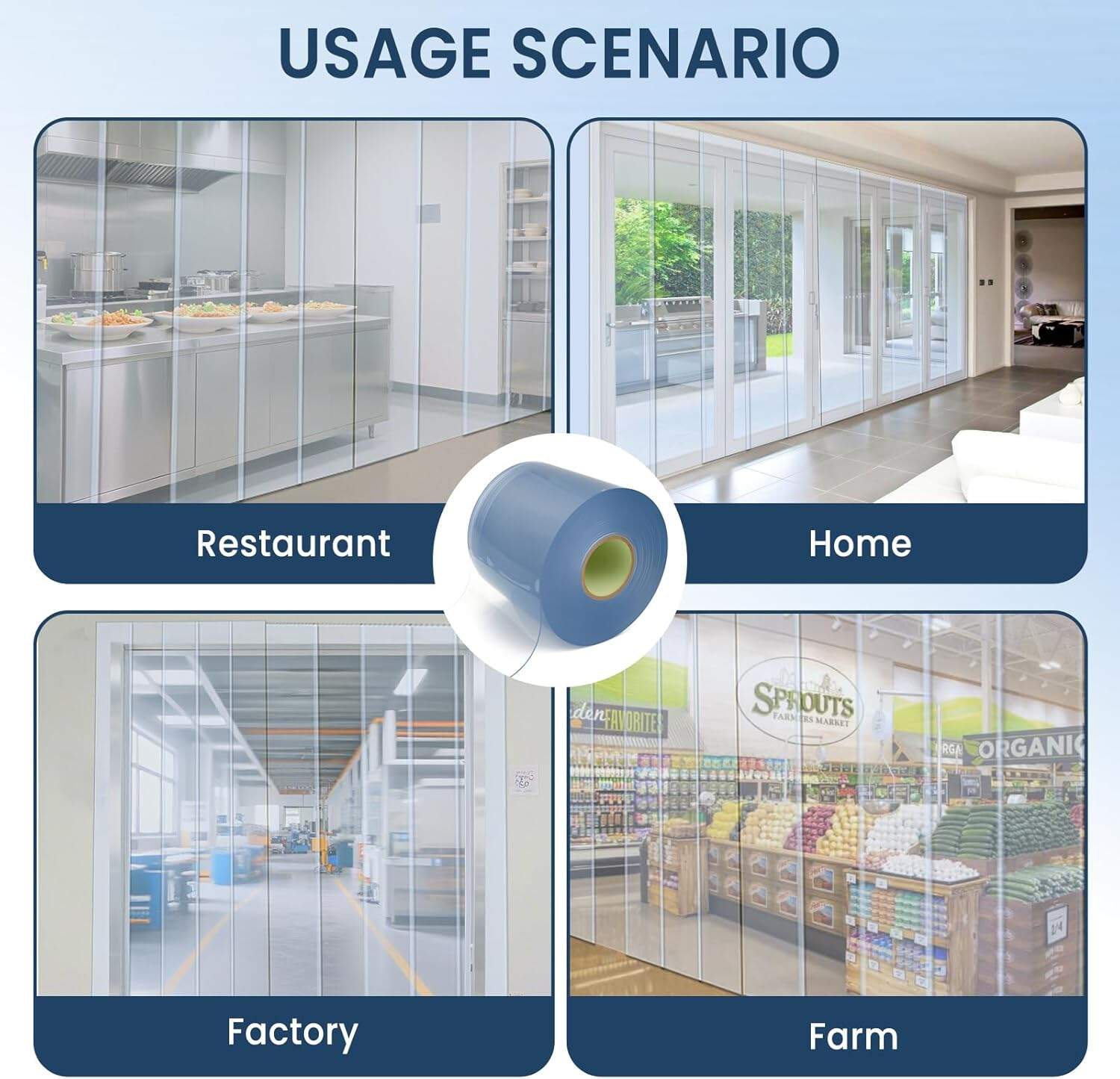
Energy Efficiency and Temperature Control with PVC Door Curtains
How PVC Door Curtains Maintain Indoor Climate Stability
PVC door curtains serve as effective thermal barriers at busy entry points, cutting down temperature swings by around 75% according to Energy Management Quarterly from last year. The way they overlap lets people and machinery move through easily while keeping most of the conditioned air inside, which helps maintain about a 30 degree difference between rooms. Research published in 2023 showed that these flexible barriers stop roughly 40% of heat transfer in cold storage facilities when compared to just leaving doors open all day. This means better climate control for sensitive goods without making nearby spaces too chilly, something warehouse managers appreciate during those long shifts.
Energy Savings Advantages in Commercial Refrigeration and HVAC Systems
Companies that install PVC curtains at their loading areas and freezer doorways typically see around a third less time spent running their heating, ventilation and air conditioning systems each year. When facilities manage to cut down temperature swings by just one degree Celsius, they end up saving about 2.5 percent on their overall energy bills. That kind of savings makes all the difference for places that need to maintain consistent cold temperatures. Supermarket chains have found that putting in these tough PVC strips cuts their cooling costs nearly in half. Plus, the HVAC equipment tends to last anywhere from three to five extra years because it doesn't have to cycle on and off so frequently.
Case Study: Reduced Energy Costs in Supermarket Entrances Using Temperature-Resistant PVC Strips
One major European supermarket chain managed to slash their yearly cooling expenses by around $22k at each store location after they put up those flexible PVC door curtains at 80 different sites. Thermal scans showed that even with hundreds of doors opening every day (over 400 times!), the freezers stayed rock solid at -20 degrees Celsius. And guess what? They got all their money back in just under a year and a half. On top of saving cash, these curtains also helped cut down carbon dioxide emissions by 38 tons each year at every store. That's basically like taking eight regular cars off the road completely for a whole year.
Trend Analysis: Rising Adoption of Insulated PVC Curtains in Eco-Conscious Retail Spaces
About two thirds of retailers have started making energy efficient doorways a priority for their sustainability efforts, which has really boosted the market for PVC curtains. The numbers tell the story pretty well actually. Stores that install these kinds of curtains get to carbon neutral status anywhere from 30 to 40 percent quicker than others, and around eight out of ten report better results on their ENERGY STAR ratings. Not surprisingly, grocery stores are at the front of this trend, accounting for nearly 60% of all business purchases of PVC curtains in the past twelve months. Makes sense when you think about it since food retailers typically operate multiple locations and need cost effective ways to cut down on heating and cooling expenses.
Customization Options for PVC Strip Curtains in Commercial Settings
Choosing the right PVC strip based on size, thickness, and overlap requirements
Optimal performance starts with precise sizing. Commercial settings typically use PVC strips 4mm to 8mm thick, with 50-60% overlap to ensure effective sealing. Research from 2023 shows that 6mm strips with 55% overlap reduce airflow leakage by 73% compared to undersized alternatives in warehouse environments.
Options for clear, anti-static, heavy-duty, and weld-grade PVC strip types
Specialized formulations meet diverse operational needs. Anti-static variants dissipate 95% of surface charge within three seconds (technical report), making them ideal for electronics manufacturing. Weld-grade strips withstand sparks up to 600°C, while clear strips retain 92% light transmission even after five years of UV exposure.
Customization for UV and chemical resistance in high-exposure environments
In corrosive or sun-intensive environments, PVC strips can be enhanced with UV stabilizers and chemical-resistant coatings. These modified versions last four times longer than standard options in automotive paint shops and chemical processing plants, based on 2024 durability trials.
Tailoring PVC door curtains to specific industry needs: food service, retail, and industrial
Industry-specific adaptations address unique demands. Food processors use FDA-compliant antimicrobial strips that reduce microbial growth by 68%. Industrial sites favor high-visibility yellow strips for safety in low-light conditions, while retailers increasingly adopt tinted curtains that block 99% of UV radiation to prevent merchandise fading-without sacrificing storefront visibility.
Hygiene, Contamination Control, and Operational Continuity
Insect and Dust Barrier Functionality for Food Service and Pharmaceutical Stores
PVC door curtains block 98% of airborne particles (Cleanroom Technology Institute, 2023), supporting ISO 14644 Class 5 air quality standards in pharmaceutical facilities. The overlapping design deters insects while allowing uninterrupted forklift traffic, aligning with FDA guidelines for contamination prevention in food processing.
How PVC Door Curtains Enhance Sanitation Without Obstructing Workflow
Transparent strips enable visual monitoring while containing spills and aerosols within designated zones. Hospitals using antimicrobial PVC report a 67% reduction in cross-contamination risks (Journal of Healthcare Facility Management, 2023), integrating seamlessly into existing hygiene protocols.
Maintaining Air Quality and Compliance in Regulated Commercial Environments
Gap-free overlaps help commercial bakeries maintain PM2.5 levels below 12 µg/m³, meeting OSHA requirements. A 2024 cleanroom contamination control stud found properly installed curtains reduce HVAC particle recirculation by 41% in regulated manufacturing spaces.
Best Practices for Cleaning and Maintaining Hygiene in PVC Strip Installations
- Daily protocol: Wipe with pH-neutral cleaners using microfiber cloths to prevent static buildup
- Monthly deep cleaning: Soak strips in 70% isopropyl alcohol for 15 minutes
- Replacement schedule: Rotate strips every 18-24 months in high-splash areas like meat processing
- Inspection checklist: Ensure alignment gaps remain under 3mm to maintain contamination control efficacy
Durability and Performance Under Extreme Environmental Conditions
Performance of PVC Strip Curtains in Freezing Cold Storage vs. High-Heat Industrial Zones
PVC curtains operate effectively from -40°F to 140°F, maintaining structural integrity across extreme temperatures. Their thermoplastic composition resists brittleness in freezing conditions and warping in high-heat environments, offering reliable separation without sacrificing flexibility.
Long-Term Resilience Against Wear, Tearing, and Chemical Exposure
Industrial-grade PVC withstands 50-100+ daily impacts in warehouses, with reinforced edges resisting tears at stress points. Studies show PVC maintains over 90% tensile strength after five years of exposure to oils, acids, and common cleaning agents, confirming long-term resilience in demanding settings.
Controversy Analysis: Flexibility Loss in Sub-Zero Conditions and Mitigation Strategies
Standard PVC may lose 15-20% flexibility below -10°F, but low-temperature formulations with added plasticizers remain pliable down to -50°F. Regular conditioning and cold-climate-specific installations prevent cracking in freezer applications.
Selecting Impact-Resistant and Low-Temperature Flexible PVC for Demanding Applications
For high-traffic zones, use 0.080"-thick PVC with 2-4" overlap to balance impact resistance and thermal stability. Food-grade antifog and weld-resistant industrial blends address sector-specific challenges-from commercial freezers to automotive production floors.
Improving Traffic Flow and Operational Efficiency in High-Footfall Stores
Uninterrupted Visibility and Easy Movement Through Doorways in High-Footfall Stores
PVC curtains provide unobstructed sightlines and seamless access for staff and customers. With 95% light transmission (per industry testing), they preserve natural visibility, enabling real-time floor monitoring. This eliminates abrupt stops at entrances-essential for stores serving 800+ visitors daily.
Reducing Bottlenecks While Maintaining Environmental Separation
Properly installed PVC curtains reduce doorway congestion by 60-70% compared to traditional doors (2024 Retail Traffic Analytics). A 30-40% strip overlap and floor clearance under 2" create an effective airlock, preserving climate zones without requiring manual operation-ideal for pharmacies and grocery stores needing rapid customer flow.
Strategy: Optimizing Strip Width and Overlap for Staff and Customer Flow
- 6-inch wide strips: Minimize lateral displacement during frequent use
- 50% horizontal overlap: Prevents gaps while reducing resistance by 25% versus full overlap
- Angled top rails: Guide foot traffic naturally toward checkout counters or high-demand aisles
Customizing these elements based on hourly foot traffic helps retailers avoid peak-hour bottlenecks.
Balancing Energy Retention with Accessibility in Busy Commercial Entrances
Advanced PVC systems reduce air leakage by up to 90% while ensuring 360° accessibility (Thermal Imaging Studies 2023). In stores with constant restocking, reinforced bottom weights help strips realign within two seconds after equipment passes-30% faster than standard vinyl-maintaining energy efficiency even during rush periods with over 100 hourly activations.
FAQ Section
What are the main benefits of using PVC door curtains?
PVC door curtains are effective thermal barriers that reduce temperature swings, save energy costs, and improve indoor climate stability. They also serve as insect and dust barriers and enhance air quality while facilitating easy movement in busy areas.
How do PVC door curtains contribute to energy efficiency?
By reducing temperature fluctuations at entry points, they decrease the load on HVAC systems, leading to significant energy savings – up to 50% in certain applications like supermarket cooling costs.
Can PVC strip curtains be customized for different industries?
Yes, they can be tailored based on size, thickness, overlap, and material properties to meet the specific needs of industries like food service, retail, and industrial applications.
How should PVC strip curtains be maintained?
Regular cleaning, use of pH-neutral cleaners, monthly deep cleaning with isopropyl alcohol, and periodic inspections are recommended to maintain hygiene and effectiveness.
Are there specific formulations of PVC curtains for extreme conditions?
Yes, low-temperature formulations and reinforced options are available for extreme cold storage and high-heat industrial zones, ensuring durability and flexibility.
Table of Contents
-
Energy Efficiency and Temperature Control with PVC Door Curtains
- How PVC Door Curtains Maintain Indoor Climate Stability
- Energy Savings Advantages in Commercial Refrigeration and HVAC Systems
- Case Study: Reduced Energy Costs in Supermarket Entrances Using Temperature-Resistant PVC Strips
- Trend Analysis: Rising Adoption of Insulated PVC Curtains in Eco-Conscious Retail Spaces
-
Customization Options for PVC Strip Curtains in Commercial Settings
- Choosing the right PVC strip based on size, thickness, and overlap requirements
- Options for clear, anti-static, heavy-duty, and weld-grade PVC strip types
- Customization for UV and chemical resistance in high-exposure environments
- Tailoring PVC door curtains to specific industry needs: food service, retail, and industrial
-
Hygiene, Contamination Control, and Operational Continuity
- Insect and Dust Barrier Functionality for Food Service and Pharmaceutical Stores
- How PVC Door Curtains Enhance Sanitation Without Obstructing Workflow
- Maintaining Air Quality and Compliance in Regulated Commercial Environments
- Best Practices for Cleaning and Maintaining Hygiene in PVC Strip Installations
-
Durability and Performance Under Extreme Environmental Conditions
- Performance of PVC Strip Curtains in Freezing Cold Storage vs. High-Heat Industrial Zones
- Long-Term Resilience Against Wear, Tearing, and Chemical Exposure
- Controversy Analysis: Flexibility Loss in Sub-Zero Conditions and Mitigation Strategies
- Selecting Impact-Resistant and Low-Temperature Flexible PVC for Demanding Applications
- Improving Traffic Flow and Operational Efficiency in High-Footfall Stores
- FAQ Section