 EN
EN

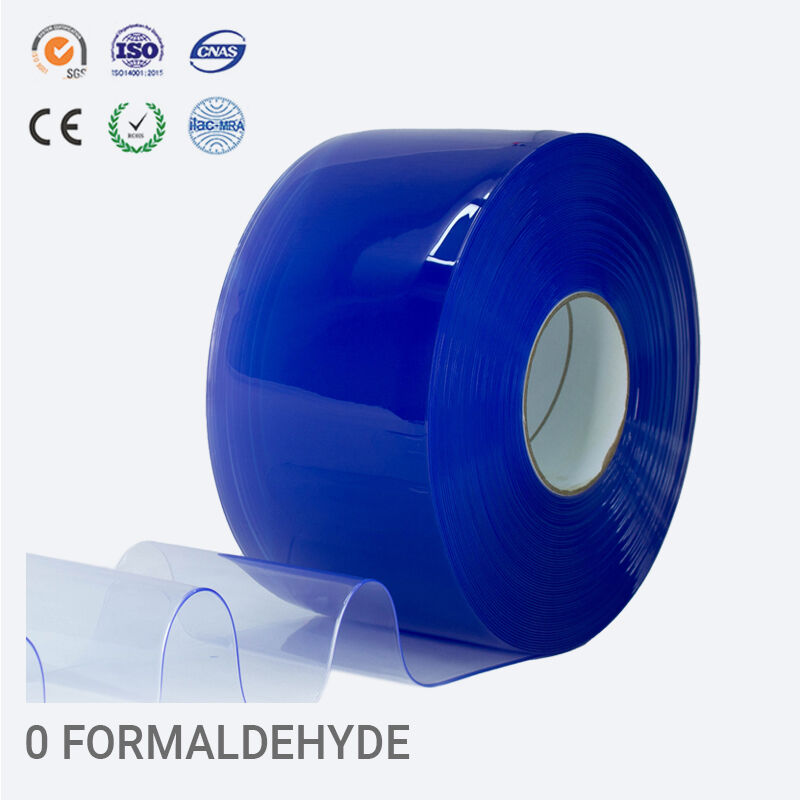
The Science Behind Electrostatic Discharge in Industrial Settings
Static electricity jumping between surfaces causes what's known as electrostatic discharge or ESD. This happens all the time in factories where sensitive equipment is made. The problem? Even tiny shocks around 100 volts can fry delicate computer chips. Most people don't even feel anything until it hits about 3,000 volts according to research from Ponemon in 2023. What might seem like small incidents actually cost companies big money. Semiconductor makers lose roughly $740,000 every year on average because of bad parts and factory shutdowns caused by these invisible electrical bursts.
Mechanisms of Static Dissipation in Anti-Static PVC Curtains
Anti-static PVC curtains are engineered to safely dissipate electrostatic charges through specialized formulations that achieve a surface resistivity of 10â¹â10¹² Ω/sq, aligning with IEC 61340-5-1 standards for ESD-safe materials. This is accomplished via:
- Conductive additives: Carbon or graphite particles dispersed throughout the PVC matrix create controlled pathways for electron flow
- Hydrophilic agents: Attract ambient moisture to form a conductive surface layer, accelerating charge dispersion
- Multi-layer construction: Combines dissipative outer layers with insulating cores to balance safety and functionality
These features enable rapid, controlled dissipation of static energy without creating short-circuit risks.
Comparative Analysis: Standard vs. Anti-Static PVC Curtains
| Property | Anti-Static PVC | Standard PVC |
|---|---|---|
| Surface resistivity | 10â¹â10¹² Ω/sq | >10¹ⵠΩ/sq |
| Charge decay time | <2 seconds | >60 minutes |
| Dust attraction rate | 12 particles/cm²/hr | 89 particles/cm²/hr |
This performance gap underscores why anti-static variants are essential in contamination-sensitive operations.
Material Composition and Performance Metrics of Anti-Static PVC Curtains
Key Additives and Polymer Engineering for Static Dissipation
What makes anti static PVC work so well comes down to some pretty sophisticated polymer science. Manufacturers add conductive materials like carbon black or small metal particles (sometimes around 15% of the total weight) which create these special network paths inside the material. These networks let electrons move through in a controlled way instead of building up static charge. The plasticizers used have been specially modified too they lower surface tension without making the material stiff. Better quality formulations show really good stability, losing less than half a percent of those additives even after two whole years. This stuff passes all the ASTM D257 tests for surface resistivity standards. And it keeps about 92 to 95% of what regular PVC can do when it comes to resisting tears. So despite being anti static, it still holds up surprisingly well during normal wear and tear situations.
Surface Resistivity, Charge Decay Rates, and Industry Standards
Performance is validated through standardized testing:
| Property | Target Range | Test Standard |
|---|---|---|
| Surface Resistivity | 10ⶠâ 10⹠Ω/sq | IEC 61340-4-1 |
| Charge Decay Rate | <2 seconds (5kV to 100V) | ANSI/ESD STM11-12 |
| Vertical Resistance | 10⸠â 10¹ⰠΩ | EN 1149-1 |
Consistent compliance across 10,000+ duty cycles ensures reliable static control in high-traffic zones, exceeding baseline ISO 9001 cleanroom expectations.
Linking Anti-Static Properties to Dust Accumulation Prevention
When static builds up, it pulls in all sorts of airborne dirt particles according to Coulomb's Law, which basically says opposite charges attract. Anti-static PVC curtains work around this problem by keeping surface voltages under 2kV, so they don't stick to dust as much. Tests show these special curtains cut down on particulate buildup about 78 percent better than regular PVC ones. Some real world results came out in 2023 too. Pharmaceutical companies using these curtains saw their clean room violations drop dramatically from 12.7% per month down to just 2.1%. The improvement comes from two factors actually electrostatic control and those curtains shedding practically nothing bigger than 0.1 microns. Pretty impressive for something that looks like ordinary plastic hanging around.
Clean Room Integration: Maintaining Contamination Control in High-Sensitivity Zones
Integration of PVC Curtains in ISO-Classified Clean Rooms
Anti static PVC curtains are really important in those ISO Class 7 cleanrooms where dust particles need to stay below 352 thousand per cubic meter according to the ISO 14644-1 standard from 2022. These special curtains act as moving walls that stop contamination spreading around but still let workers and equipment move through freely. Take semiconductor factories as an example. Their conveyor belts often have these PVC curtains installed to keep tiny particles smaller than 10 microns away when handling silicon wafers. This matters a lot because at the nanoscale level even the smallest speck can ruin entire batches of chips. Manufacturers know this well and invest heavily in maintaining these standards throughout their production lines.
Maintaining Airflow Integrity Without Compromising Cleanliness
Good cleanroom design keeps laminar airflow around 0.45 meters per second give or take 20%, which helps control contamination levels effectively. Tests in several pharmaceutical facilities show that installing those 2mm thick anti-static PVC curtains instead of regular doors cuts down particulate entry by almost 90% in airlock areas. The flexibility of these curtains makes them better suited for maintaining the required pressure differences (about +15 Pa in most cases) across sterile zones that follow FDA regulations. Plus they stop static electricity from pulling dust onto sensitive packaging machines, something that happens quite often with traditional door systems. Many manufacturers have switched to this solution after seeing real improvements in their quality control metrics over time.
Case Study: Pharmaceutical Production with Enhanced Contamination Control
One major drug maker saw their rejected products drop by about 20% when they upgraded 14 production areas with these special anti-static PVC curtains. The setup kept everything within EU GMP standards for Annex 1 requirements during those critical vial filling steps, since it trapped all those tiny 0.5 micrometer particles without messing up the clean room air flow from the HVAC system. Looking at audit reports later on, there were absolutely no electrostatic discharge problems reported in any of the freeze drying chambers throughout an entire 18 months, which really speaks volumes about how dependable this kind of solution actually is in real world manufacturing conditions.
Growing Adoption in Biotech and Microelectronics Clean Rooms
The growing need for mRNA vaccines has pushed biomanufacturing to expand rapidly, and according to BioProcess International from last year, around 73% of the newest Class 5 biological safety cabinets come equipped with those PVC curtain airlocks. Something similar is happening in microelectronics too. Cleanrooms working on those advanced 5nm chips have seen their wafer defect rates drop by about 40% since switching out solid walls for these special static-dissipative PVC strip curtains. Why does this matter? Well, industries are getting pickier about specifications all the time. Semiconductor factories today need surfaces that resist electricity at levels below 10^9 ohms per square just to avoid problems with tiny electrical charges messing up the fabrication process at quantum levels.
Dust Containment and Airflow Management in Industrial Applications
Industrial PVC curtains effectively manage particulate contamination while supporting operational airflow. Their modular strip design creates adaptable barriers that block dust and debris without hindering equipment access or personnel movementâaddressing two core challenges in manufacturing and processing environments.
Dust Containment Mechanisms of PVC Strip Curtains
Overlapping PVC strips form a seal-like barrier that captures up to 92% of airborne particles larger than 10 microns (Industrial Hygiene Journal 2023). Weighted bottom edges and interlocking profiles prevent bypass, while anti-static properties minimize particle adhesion. Facilities commonly report 40â60% fewer filter replacements post-installation due to reduced debris ingress.
Real-World Data on Particle Reduction After Curtain Installation
A 2023 multi-site study across 12 automotive plants revealed PM2.5 reductions of 35â48% in welding zones following the deployment of anti-static PVC curtains. Maintenance records showed a corresponding 28% decline in equipment cleaning frequency, directly linked to fewer unplanned stoppages and improved uptime.
Balancing Air Pressure, Filtration, and Thermal Efficiency
Engineered PVC curtains sustain critical pressure differentials in climate-controlled environments while allowing 85â92% airflow continuity. This dual capability reduces HVAC energy consumption by 12â18% compared to solid partitions, according to ASHRAE 2022 performance data. Thermal imaging confirms their effectiveness in minimizing temperature stratification near loading docks, enhancing thermal efficiency.
Debunking the Myth: Do PVC Curtains Restrict or Optimize Airflow?
Contrary to outdated assumptions, computational fluid dynamics models show that staggered PVC curtain configurations improve laminar airflow patterns. High-traffic facilities experience 23% faster air exchange rates with strip curtains versus open doorways, promoting more efficient particulate removal without mechanical assistance.
FAQ
What is Electrostatic Discharge (ESD)?
Electrostatic Discharge (ESD) is the sudden flow of electricity between two electrically charged objects caused by contact, an electrical short, or dielectric breakdown. It can damage sensitive electronics.
Why are anti-static PVC curtains important?
They dissipate electrostatic charges, prevent dust accumulation, and maintain clean environments by reducing particulate buildup, especially in sensitive industrial settings like clean rooms.
How do anti-static curtains compare to standard PVC curtains?
Anti-static curtains have lower surface resistivity, faster charge decay times, and a reduced dust attraction rate compared to standard PVC curtains.
Table of Contents
- The Science Behind Electrostatic Discharge in Industrial Settings
- Mechanisms of Static Dissipation in Anti-Static PVC Curtains
- Comparative Analysis: Standard vs. Anti-Static PVC Curtains
- Clean Room Integration: Maintaining Contamination Control in High-Sensitivity Zones
- Integration of PVC Curtains in ISO-Classified Clean Rooms
- Maintaining Airflow Integrity Without Compromising Cleanliness
- Case Study: Pharmaceutical Production with Enhanced Contamination Control
- Growing Adoption in Biotech and Microelectronics Clean Rooms
- Dust Containment and Airflow Management in Industrial Applications
- FAQ