 EN
EN

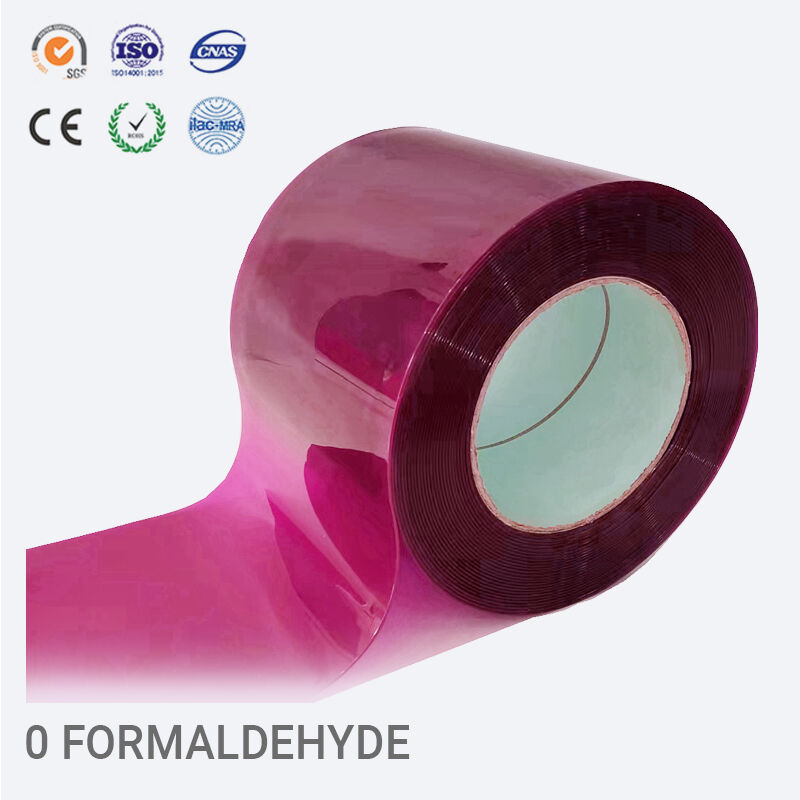
Understanding Welding Curtain Color Grades and Optical Protection Levels
UV, Infrared, and Blue Light Filtration Across L, M, D, and ED Grades
Welding curtains are classified by standardized optical density grades—light (L), medium (M), dark (D), and extra dark (ED)—each engineered to filter specific wavelengths of hazardous radiation: ultraviolet (UV), infrared (IR), and high-energy blue light. L-grade curtains provide moderate protection ideal for low-heat tasks like grinding or low-amperage MIG, blocking 99% of UV radiation while preserving visibility. M-grade amber or red variants absorb 99.9% of UV and reduce blue light transmission by up to 70%, making them well-suited for mid-range amperage welding. D-grade materials offer robust shielding for shielded metal arc welding (SMAW), while ED-grade curtains—typically matte green with Shade 8+ filtration—block 99.99% of visible light and near-total IR/UV, enabling safe plasma cutting operations without compromising adjacent work areas.
How Base Materials Influence Spectral Absorption
Base material composition critically shapes spectral absorption performance:
- Fibreglass delivers stable, long-term UV and IR filtration with minimal thermal degradation
- Neoprene-coated fabrics enhance infrared absorption and resist sparks and molten metal splash
-
Bronze-infused composites selectively suppress blue light—key for reducing retinal fatigue during precision TIG welding
Material thickness, weave density, and laminated coatings further refine transmission curves: thicker ED-grade weaves absorb broader wavelength bands, while specialized reflective laminates reject infrared energy without sacrificing usable light transmission.
Matching Welding Curtain Colors to Process Type and Amperage Range
Yellow and Hi-Vis Amber for Low-to-Medium Amperage Applications (MIG, Spot Welding, Grinding)
Yellow and hi-vis amber curtains—typically L-grade—optimize visibility and operator awareness for processes under 200 amps, including MIG welding, spot welding, and grinding. They block 99% of UV radiation while permitting sufficient ambient light for extended use in general fabrication zones. Their moderate optical density supports situational safety and reduces eye strain, meeting ANSI Z87.1 impact resistance requirements for auto repair and light assembly environments.
Bronze, Green, and Ultra-Low-Vis Green for High-Intensity Processes (SMAW, Oxy-Fuel, Plasma Cutting)
Processes exceeding 200 amps—including SMAW, oxy-fuel cutting, and plasma cutting—require deeper optical filtration. Bronze (M/D-grade) and ultra-low-vis green (ED-grade) curtains absorb intense IR and blue light emissions from high-energy arcs. Plasma cutting above 400 amps, which produces arcs exceeding 12,000°F, demands ED-grade green curtains with 99.99% IR filtration. Though darker tints reduce ambient visibility, they are essential for preventing arc eye and thermal skin injury—and remain the only compliant choice for sustained high-amperage work.
Industry-Specific Welding Curtain Color Recommendations
Red Curtains in TIG and Precision Welding: Contrast Enhancement and Blue-Light Suppression Benefits
Red welding curtains significantly improve visual acuity during TIG welding by enhancing contrast between the arc and base metal by up to 40% compared to standard screens. This aids precise joint tracking and lowers rework rates in aluminum and stainless steel applications. By filtering 99.7% of high-energy blue light—without overly restricting visible light—they mitigate retinal fatigue while maintaining compliance with ANSI Z49.1 optical safety standards.
Multi-Zone Color Strategies for Mixed-Process Facilities (e.g., Fabrication Shops, Aerospace MROs)
Facilities handling multiple welding processes benefit from zoned color strategies that prevent optical cross-contamination. Pairing bronze (M/D-grade) curtains at plasma cutting stations—which block 99.9% of infrared radiation—with amber (L-grade) screens around adjacent MIG cells reduces glare-related incidents by 57%, per industrial safety audits. In aerospace maintenance, repair, and overhaul (MRO) hangars, visual zoning helps technicians rapidly identify safe observation points. Best practice calls for dedicating 25–30% of floor space to buffer zones using opaque partitions between color-coded work cells.
FAQ
What are the main grades of welding curtains?
Welding curtains are categorized into L (light), M (medium), D (dark), and ED (extra dark) grades, each providing specific levels of radiation filtration for UV, IR, and blue light.
Which welding processes require ED-grade curtains?
ED-grade curtains are ideal for high-amperage processes like plasma cutting and shielded metal arc welding (SMAW), where maximum UV and IR protection is crucial.
Why are red curtains recommended for TIG welding?
Red curtains enhance contrast between the welding arc and base material, reduce blue light exposure, and help mitigate retinal fatigue, essential for precision TIG welding tasks.
How do multi-zone color strategies benefit mixed-process facilities?
Using color-coded curtains for different zones prevents optical cross-contamination, reduces glare, and improves safety and productivity in mixed-process environments.
What base materials are commonly used in welding curtains?
Common base materials include fiberglass, neoprene-coated fabrics, and bronze-infused composites, each offering distinct advantages like UV/IR filtration, spark resistance, and blue light suppression.