 EN
EN

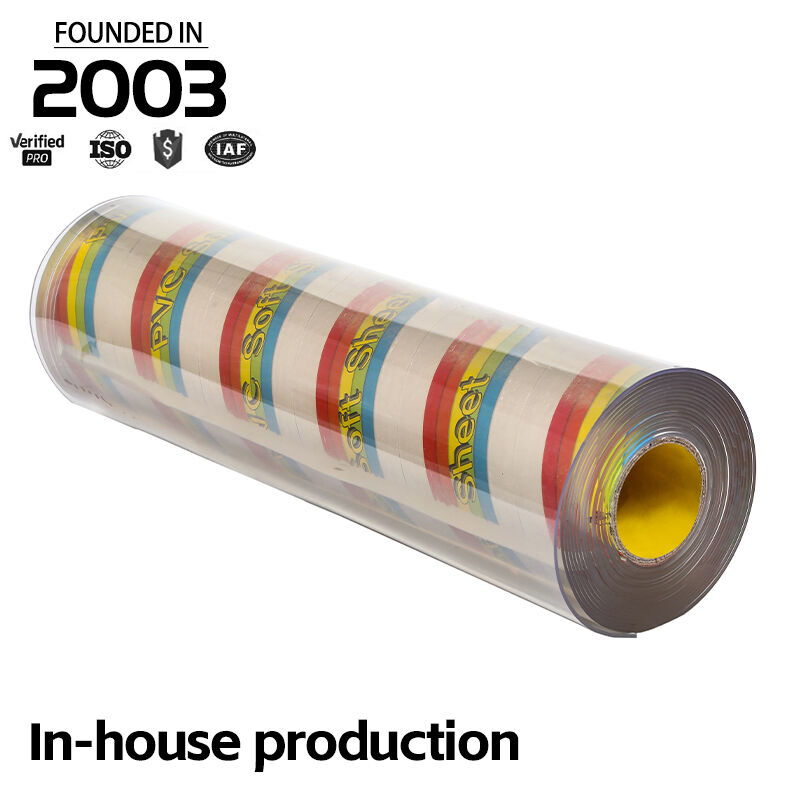
PVC Clear Sheet Thickness and Structural Performance
The thickness of PVC clear sheet directly dictates its structural integrity and load-bearing capacity. Thicker gauges (3–5 mm) provide essential rigidity for large-span installations, while thinner options (1–2 mm) prioritize light transmission but require reinforced framing in high-wind zones.
Gauge Selection: Balancing Light Transmission, Rigidity, and Wind Load Resistance
Selecting the optimal gauge involves trade-offs:
- Light transmission decreases by 2–4% per millimeter of added thickness
- Sheets ≥1.5 mm withstand wind loads up to 30–50 mph; 3–5 mm variants resist 50–70 mph gusts
- Cold-temperature brittleness increases by 15% below 60°F for sheets under 2 mm
A 2023 industrial survey found that 70% of installation failures occurred when ≥2 mm sheets were used in areas exceeding 45 mph wind thresholds—highlighting the importance of matching gauge to local wind exposure.
Tear Strength and Flex Life in Real-World Installation Scenarios
When fasteners concentrate stress on materials, it can cut their lifespan down by about 40% if there's no good reinforcement work done. There are several important things to think about here. First, making sure those seams hold together properly where structures join is critical. Then we have to consider how well materials handle repeated loads in areas that get a lot of traffic. And finally, the ability to resist fatigue from constant bending at mounting spots matters a lot too. Field tests indicate that materials which maintain at least 90% of their original tear strength after going through around 5,000 flexing cycles tend not to fail early in places exposed to temperature changes throughout seasons. Most problems actually start at corners, with statistics pointing to this being the main issue spot in roughly two thirds of real world failures. That's why many engineers now recommend using rounded corners instead of sharp ones and spreading out the fastening rather than clustering them all together.
Weather Resistance and Thermal Efficiency of PVC Clear Sheet
Cold-Weather Flexibility and R-Value Contribution to Seasonal Energy Savings
PVC clear sheets stay strong even at temperatures as low as minus 20 degrees Celsius. They don't become brittle like some materials do, which means they won't crack from ice buildup or strong winds blowing against them. This makes these sheets particularly good for things like greenhouse covers and temporary structures during colder months. The insulation properties are pretty impressive too. These sheets have an R-value ranging between 1.25 and 1.5 per inch thickness. That actually cuts down on heat loss through conduction by around 30% compared to regular single pane glass windows. So during winter months, buildings using these sheets need less heating because they keep warmth inside better. Just make sure there's not much air leaking around the edges where the sheets meet the frames. For homes and businesses looking to upgrade existing structures, adding these insulated panels can lead to real money savings over seasons while still letting plenty of natural light come through.
UV Stability and Long-Term Clarity Retention in PVC Clear Sheet
Yellowing, Shrinkage, and Embrittlement: ASTM G154 Accelerated Aging Benchmarks
When PVC clear sheets are exposed to UV light, they start breaking down through a process called photochemical degradation. What happens? Well, the polymer chains get broken apart which causes those unsightly yellow spots. Plasticizers tend to leach out over time, making the material shrink slightly. And then there's cross linking, where molecules bond together abnormally, ultimately leading to brittle material that cracks easily. To test how these materials hold up, industry standards like ASTM G154 come into play. These tests mimic actual outdoor conditions using special UVA-340 lamps set at around 0.89 watts per square meter of irradiance while cycling through 60 degree Celsius humidity levels. Most samples spend between 500 to 2000 hours under these conditions, roughly equivalent to one to four years of real world exposure. There are specific criteria for determining if a product passes or fails during these evaluations.
- ≤5% haze increase (per ASTM D1003)
90% retention of tensile strength
- No visible cracking after 1,500 hours
High-performance formulations incorporate benzotriazole UV absorbers and hindered amine light stabilizers (HALS), which scavenge free radicals and reduce yellowing by 70% versus untreated sheets. These additives support functional lifespans exceeding 10 years in temperate climates.
Optical Quality and Surface Functionality for Aesthetic Integration
Clarity vs. Haze (ASTM D1003), Anti-Glare Coatings, and Scratch Resistance
How well something looks visually matters a lot when it comes to integrating aesthetics, particularly for windows and glazed surfaces. High quality PVC clear sheets manage to keep haze at under 1 percent according to ASTM D1003 standards, which means what people see through them stays crystal clear without any distortion. Special anti glare coatings help spread out those annoying bright spots that reflect too much light, cutting down on eye fatigue inside rooms exposed to sunlight by around half, research from materials engineers shows. The surfaces also get treated with micro hardness processes that make them resistant to scratches better than most materials rated at 3H on the pencil hardness scale. At the same time these treatments maintain over ninety two percent light transmission so buildings stay bright even after lots of cleanings and weather changes throughout seasons.
Material Compatibility with Frames: Preventing Corrosion and Adhesive Failure
When PVC clear sheets work well with their framing systems chemically, they help stop things from breaking down over time through electrochemical processes. The plasticizer free versions are especially good because they stop chloride from moving around, which is something that can really eat away at aluminum joints after just about five years of use. Speaking of sticking power, these sheets have been specially treated so when bonded together, they hold on tight with peel strength above 35 Newtons per square centimeter according to ISO standards. That's actually double what regular sheets manage in those humidity test situations. Because of this strong bond, there's much less chance of edges coming apart even when materials expand and contract differently due to temperature changes. We're talking about differences as small as 0.18 millimeters per meter per degree Celsius. This makes them great for sealing against water when attached to materials like vinyl, wood, or composites. And get this, they still perform reliably even when exposed to brutal freeze-thaw cycles ranging from minus 40 degrees all the way up to 80 degrees Celsius.
FAQ
What factors should I consider when choosing the thickness of a PVC clear sheet?
When selecting the thickness of PVC clear sheets, consider the requirements for structural integrity and light transmission. Thicker sheets (3–5 mm) offer better load-bearing capacity and are ideal for large-span installations, whereas thinner sheets (1–2 mm) allow more light but may need additional support in high-wind areas.
How can I ensure PVC clear sheets withstand high wind conditions?
To ensure PVC clear sheets can withstand high wind conditions, select sheets that have the appropriate thickness. Sheets of 1.5 mm or more can resist wind loads up to 30–50 mph, while those 3–5 mm thick can withstand 50–70 mph gusts.
Are PVC clear sheets suitable for cold climates?
Yes, PVC clear sheets maintained structural integrity even at temperatures as low as minus 20 degrees Celsius. They are less likely to become brittle, making them suitable for use in cold climates.
What measures should be taken to prevent yellowing of PVC clear sheets?
To prevent yellowing, high-performance PVC sheets incorporate benzotriazole UV absorbers and hindered amine light stabilizers, which reduce yellowing by 70% compared to untreated sheets. These can significantly extend the sheet's lifespan.
Do PVC clear sheets offer good thermal efficiency?
Yes, PVC clear sheets offer significant thermal efficiency with an R-value ranging between 1.25 and 1.5 per inch thickness, reducing heat loss through conduction by around 30% compared to regular single pane glass windows.
Table of Contents
- PVC Clear Sheet Thickness and Structural Performance
- Weather Resistance and Thermal Efficiency of PVC Clear Sheet
- UV Stability and Long-Term Clarity Retention in PVC Clear Sheet
- Optical Quality and Surface Functionality for Aesthetic Integration
-
FAQ
- What factors should I consider when choosing the thickness of a PVC clear sheet?
- How can I ensure PVC clear sheets withstand high wind conditions?
- Are PVC clear sheets suitable for cold climates?
- What measures should be taken to prevent yellowing of PVC clear sheets?
- Do PVC clear sheets offer good thermal efficiency?