 EN
EN

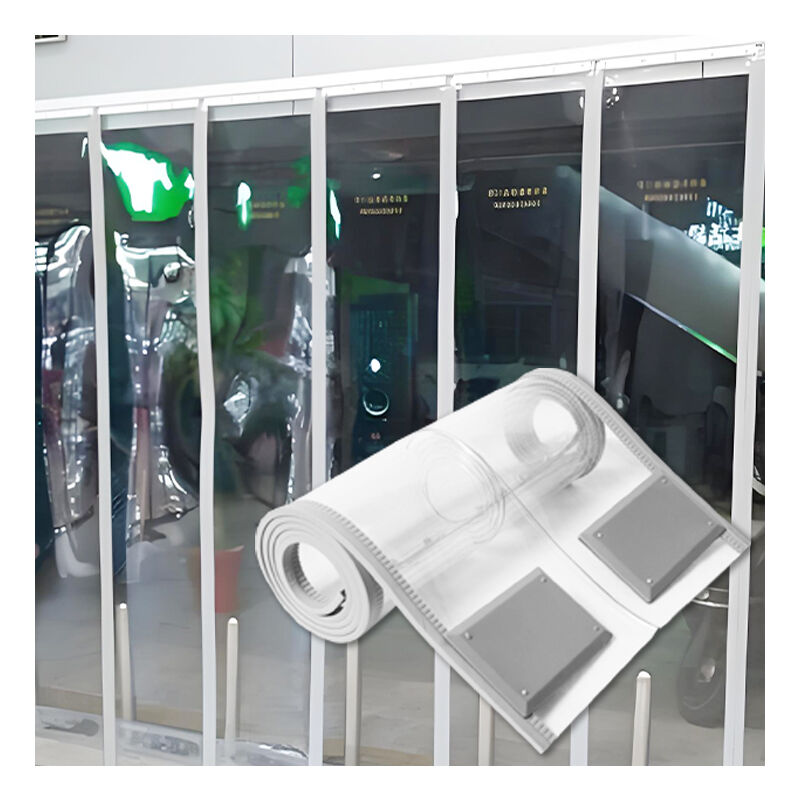
Why PVC Magnetic Curtain Material Excels in Harsh Environments
UV, Chemical, and Abrasion Resistance of Reinforced PVC Formulation
Reinforced PVC formulations deliver exceptional resistance to industrial degradation triggers. UV stabilizers prevent molecular breakdown under constant sunlight exposure—avoiding the brittleness that plagues non-treated plastics. Its polymer structure inherently repels oils, solvents, and mild acids commonly found in manufacturing settings, making it ideal for environments like automotive plants where fluid splashes occur daily. A third-layer reinforcement of high-tenacity fibers enhances abrasion resilience, enabling the material to withstand over 500,000 impact cycles from machinery or forklift traffic without tearing (Material Durability Report 2024). Unlike generic vinyl, this engineered composite maintains flexibility down to –40°F, resisting surface cracking even under sustained particulate friction.
Impact Resilience and Low-Temperature Flexibility for Year-Round Reliability
Advanced plasticization and impact modifiers allow PVC magnetic curtains to absorb sudden collisions—such as pallet jostling—without permanent deformation, recovering 98% of their original shape within seconds. Specialized low-temperature additives preserve elasticity in freezer-room conditions (down to –40°F), eliminating the brittle failure common in standard PVC. At the opposite extreme, the formulation remains dimensionally stable up to 160°F, preventing warping or magnet displacement during summer heat exposure. This broad thermal tolerance ensures consistent sealing performance across climates—from Alaskan winters to desert warehouses—removing seasonal maintenance gaps.
How the Magnetic Closure System Enhances Durability and Sealing Integrity
Embedded magnet alignment and self-closing mechanics prevent gap formation
Neodymium magnets are precisely embedded along the full length of each PVC strip, creating uniform magnetic attraction across the entire curtain interface. This alignment enables automatic repositioning after disturbances—like accidental contact or airflow—and ensures immediate, hands-free resealing. Unlike gravity-dependent strip curtains that rely on perfect vertical alignment to function, this self-closing system eliminates persistent gaps that compromise environmental control, dust containment, and energy efficiency in industrial spaces.
Magnetic edge reinforcement vs. conventional strip fraying: failure mode comparison
Conventional vinyl strips degrade primarily through edge abrasion and lateral fatigue, typically failing within 12–18 months in high-traffic zones. In contrast, magnetic-reinforced edges distribute mechanical stress across encapsulated neodymium magnets and reinforced PVC layers—preventing localized wear and corrosion exposure. Validation testing shows these curtains sustain over 200,000 operational cycles without edge compromise. Because the magnets are fully encapsulated—not externally mounted—the system avoids corrosion pathways that undermine adhesive- or bracket-mounted alternatives, extending functional lifespan by up to 300%.
Real-World Lifespan: PVC Magnetic Curtain Performance Data from Industrial Use
Industrial facilities report documented service lives exceeding 8 years for PVC magnetic curtains in high-traffic environments—more than double the typical lifespan of standard strip curtains. Warehouse audits confirm they retain functional integrity after withstanding over 3 million transit cycles, whereas conventional systems require replacement at approximately 1.5 million passes. In cold storage applications (–20°C), magnetic curtains maintain 96% seal efficiency after 5 years; conventional systems show 40% gap formation within just 2 years. These durability gains translate directly into operational savings: facilities report 30% fewer replacements and 15% reduced energy losses over a 5-year period. Under continuous outdoor exposure, reinforced PVC exhibits less than 10% tensile strength degradation after 7 years—validating its long-term viability in demanding industrial applications.
Maximizing Long-Term Value: Installation, Maintenance, and Replacement Best Practices
Proper mounting and alignment to preserve magnetic integrity and strip longevity
Correct installation is foundational to maximizing lifespan. Begin by preparing smooth, debris-free mounting surfaces—gaps exceeding 3mm reduce sealing efficiency by 40%, per industrial door studies. Use laser levels to ensure full-length vertical alignment, preventing uneven magnetic force distribution that leads to premature strip warping. Follow manufacturer guidelines for fastener spacing: fewer than four anchors per linear meter induces sagging, while more than eight creates damaging pressure points. Thermal expansion gaps are equally critical—omitting them accounts for 57% of tensile failures in cold environments (2023 Material Flexibility Report). Always leave 6–8mm of expansion space to accommodate material movement.
| Installation Factor | Performance Impact | Recommendation |
|---|---|---|
| Surface Flatness | 40% sealing loss with >3mm gaps | Grind uneven surfaces before mounting |
| Anchor Spacing | Premature sagging with <4 anchors/m | Use 5–7 anchors per linear meter |
| Thermal Gap | 57% failure rate if omitted | Leave 6–8mm expansion space |
Cleaning protocols and environmental monitoring to extend service life
Proactive maintenance counters key environmental stressors. Conduct bi-weekly wipe-downs using pH-neutral cleaners—acidic solutions accelerate polymer chain degradation threefold (Chemical Resistance Study, 2023). Monitor ambient conditions closely: sustained temperatures above 60°C promote plasticizer migration, while UV exposure exceeding 120k lux warrants application of UV-stabilizing coatings. Quarterly inspections should focus on magnetic channel cleanliness—particulate accumulation here is the leading cause of seal degradation in food processing and pharmaceutical facilities. Replace strips showing >15% lengthwise compression or visible crystalline formations, both definitive signs of irreversible polymer fatigue.
FAQ Section
What makes PVC magnetic curtains suitable for harsh environments?
PVC magnetic curtains are designed with reinforced PVC formulation, UV stabilizers, and abrasion-resistant features, allowing them to withstand chemical exposure, heavy impact, and extreme temperatures.
How do magnetic closure systems outperform traditional gravity-based systems?
Magnetic closure systems provide self-closing mechanics and uniform magnetic alignment, ensuring consistent sealing and reducing persistent gaps that can compromise environmental control.
What is the typical lifespan of PVC magnetic curtains in industrial settings?
In high-traffic industrial environments, PVC magnetic curtains have documented service lives exceeding 8 years—more than twice the lifespan of standard strip curtains.
How should PVC magnetic curtains be installed to ensure durability?
Ensure smooth, debris-free mounting surfaces, proper vertical alignment, correct fastener spacing (5–7 anchors per meter), and allow for thermal expansion gaps (6–8mm).
What cleaning protocols extend the service life of PVC magnetic curtains?
Bi-weekly cleaning with pH-neutral cleaners, quarterly inspections for magnetic channel cleanliness, and monitoring for environmental stressors like UV exposure can significantly extend the lifespan of these curtains.
Table of Contents
- Why PVC Magnetic Curtain Material Excels in Harsh Environments
- How the Magnetic Closure System Enhances Durability and Sealing Integrity
- Real-World Lifespan: PVC Magnetic Curtain Performance Data from Industrial Use
- Maximizing Long-Term Value: Installation, Maintenance, and Replacement Best Practices
-
FAQ Section
- What makes PVC magnetic curtains suitable for harsh environments?
- How do magnetic closure systems outperform traditional gravity-based systems?
- What is the typical lifespan of PVC magnetic curtains in industrial settings?
- How should PVC magnetic curtains be installed to ensure durability?
- What cleaning protocols extend the service life of PVC magnetic curtains?